And some of those techniques were highly original. Like: rubbing graphite into areas of dried impasto. (It is possible that the distant street through the window was acheived this way.) Never seen the drawing before. The painting is, of course, a masterpiece. I defy anyone not to love it.
Is usually not liked by simplistic idiots that cannot understand his wonderful Dickensian whimsicality. I have a wonderful autobiography where he tells why he needed to become an illustrator rather than an "artist" because he had to support his family and was fed up with been poor...Like most of us, ain't it?
Oscar, allow me to indulge in a little advertising. Bloggers may be tired of me rabbitting on about David Hockney's book - but here I go one more time: SECRET KNOWLEDGE: Recovering the lost techniques of the old masters. by DAVID HOCKNEY. ISBN: 0-500-23785-9 He discusses all his research into the use of lenses, cameras lucida, obscura and other optical gadgets in the western fine art tradition. The book is beautifully illustrated and Hockney is an engaging and unpretentious writer with fascinating ideas on the way optical instruments have influenced the development of our visual culture.
Please, feel free to make any adition or correction you need to make to the blogs. You are most welcome, Limbó. There is also a BBC documentary on the subject, shot magisterially by my good friend John Hooper. And as well a great film by the Quay brothers in a similar vein: De Artificiali Perspectiva aka Anamorphosis (UK, 1991)
Qué pedazo de animal era Rockwell, dios mío. Más allá de su técnica incomparable a veces me pregunto si "el sueño americano" realmente existió o fue un inventó de él. Porque todas sus ilustraciones transmiten optimismo, buena onda, una especie de felicidad. Hace poco leí que salió a subasta ( a precio astronómico ) una pintura de Rockwell que su rico propietario había guardado durante años en su mansión emparedada para que no se la robaran. Como era imnposible verla había mandado colgar una réplica en el salón. ¿Se puede ser tan pelotudo?...tener un Rockwell en casa y no poder mirarlo...increíble!!!
Gustavo: no podría estar más de acuerdo con vos acerca de la técnica (ojo que toco muy de oreja, pero el resultado me parece increíble) y sobre todo la sensación de "american dream" en las ilustraciones de Rockwell.
Interesantísimo lo que cuenta Límbolo acerca de la forma de lograr la luz de la calle detrás de la vidriera (alucinante!)en este dibujo.
Gracias Oscar por poner a Norman Rockwell y por lo que decís acerca de su elección personal y la cámara lúcida!.
Y al que no le gusta Rockwell... que se yo... que se joda.
Re the restaurant picture, I love this beautiful, iconic and sentimental image for the best of reasons - a kindly view of what it is to be human in difficult circumstances.
Uh - I've just read my pretentious comment. I've made a mental note to myself not to leave messages on blog sites having just staggered in from a Friday night at the pub - I love the picture though!
I think both of Pete's comments are very British. And I hope to take a kindly view of what it's like to be human in difficuilt circumstances...i.e. Staggering in from Friday night at the pub.
I've never seen a B&W rockwell before. Interesting how it seems less "commercial", just for that.
OScar Grillo wrote: "Is usually not liked by simplistic idiots that cannot understand his wonderful Dickensian whimsicality." While he was alive the concensus in the USA seemed to be that he was only liked by simplistic idiots because of his "old-fashioned" representationalism. ;-)
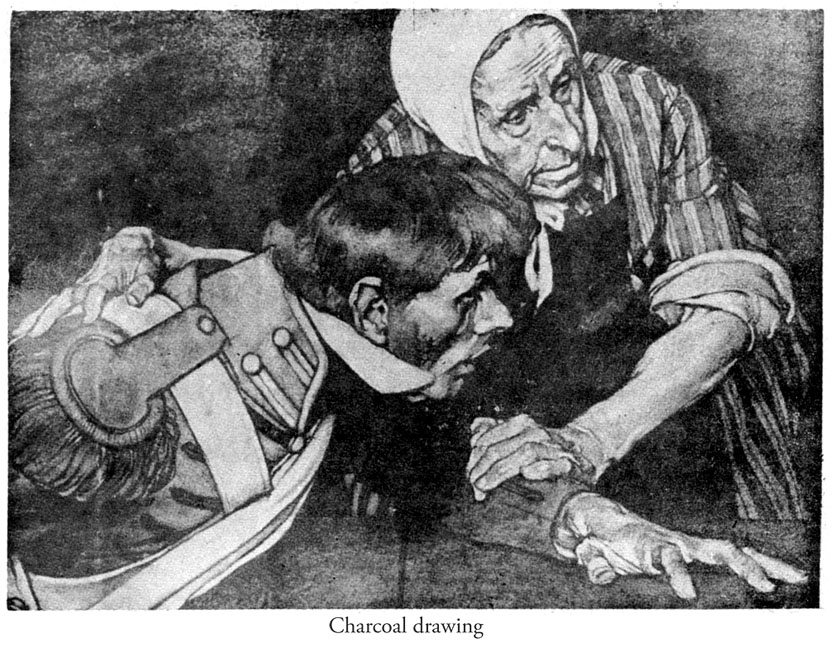
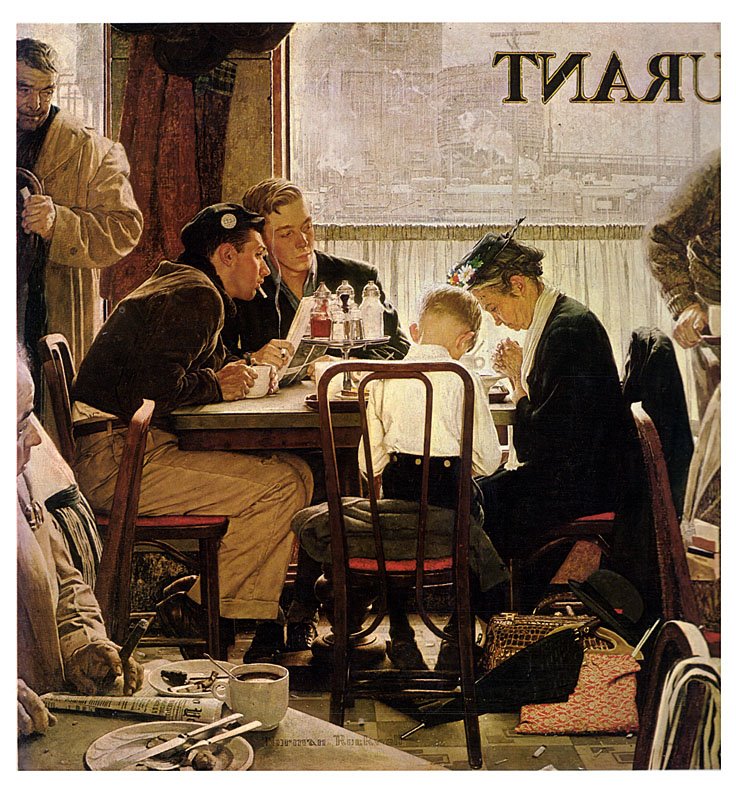 What can one say in front of such amazing technique? Reminds me of Vermeer, who also used lenses for his paintings.
And some of those techniques were highly original. Like: rubbing graphite into areas of dried impasto. (It is possible that the distant street through the window was acheived this way.)
ReplyDeleteNever seen the drawing before.
The painting is, of course, a masterpiece. I defy anyone not to love it.
Is usually not liked by simplistic idiots that cannot understand his wonderful Dickensian whimsicality. I have a wonderful autobiography where he tells why he needed to become an illustrator rather than an "artist" because he had to support his family and was fed up with been poor...Like most of us, ain't it?
ReplyDeleteI think, that I know this artist. I saw calendars with hes illustrations.He is fantastic artist!
ReplyDeleteAndrei. He's supposed to be the MOST BELOVED artist in America.
ReplyDeleteWhat do you mean by "lenses", please?
ReplyDeleteVermeer (And many other artists) used a "Camera Lucida" to project the live image into a canvass and paint on top (with great genius, I must add)
ReplyDeleteOscar, allow me to indulge in a little advertising.
ReplyDeleteBloggers may be tired of me rabbitting on about David Hockney's book - but here I go one more time:
SECRET KNOWLEDGE: Recovering the lost techniques of the old masters.
by DAVID HOCKNEY.
ISBN: 0-500-23785-9
He discusses all his research into the use of lenses, cameras lucida, obscura and other optical gadgets in the western fine art tradition.
The book is beautifully illustrated and Hockney is an engaging and unpretentious writer with fascinating ideas on the way optical instruments have influenced the development of our visual culture.
Please, feel free to make any adition or correction you need to make to the blogs. You are most welcome, Limbó. There is also a BBC documentary on the subject, shot magisterially by my good friend John Hooper.
ReplyDeleteAnd as well a great film by the Quay brothers in a similar vein:
De Artificiali Perspectiva
aka Anamorphosis (UK, 1991)
Is that the film that went out at the publication of the Hockney book, or something else?
ReplyDeleteDid'nt know about the Quay's film.
Is that one indeed. The Quays film is quite scholastic..Beautifully shot, as to be expected.
ReplyDeleteQué pedazo de animal era Rockwell, dios mío. Más allá de su técnica incomparable a veces me pregunto si "el sueño americano" realmente existió o fue un inventó de él. Porque todas sus ilustraciones transmiten optimismo, buena onda, una especie de felicidad.
ReplyDeleteHace poco leí que salió a subasta ( a precio astronómico ) una pintura de Rockwell que su rico propietario había guardado durante años en su mansión emparedada para que no se la robaran. Como era imnposible verla había mandado colgar una réplica en el salón. ¿Se puede ser tan pelotudo?...tener un Rockwell en casa y no poder mirarlo...increíble!!!
thank you re: camera lucida.
ReplyDeleteGustavo: no podría estar más de acuerdo con vos acerca de la técnica (ojo que toco muy de oreja, pero el resultado me parece increíble) y sobre todo la sensación de "american dream" en las ilustraciones de Rockwell.
ReplyDeleteInteresantísimo lo que cuenta Límbolo acerca de la forma de lograr la luz de la calle detrás de la vidriera (alucinante!)en este dibujo.
Gracias Oscar por poner a Norman Rockwell y por lo que decís acerca de su elección personal y la cámara lúcida!.
Y al que no le gusta Rockwell... que se yo... que se joda.
Re the restaurant picture, I love this beautiful, iconic and sentimental image for the best of reasons - a kindly view of what it is to be human in difficult circumstances.
ReplyDeleteUh - I've just read my pretentious comment. I've made a mental note to myself not to leave messages on blog sites having just staggered in from a Friday night at the pub - I love the picture though!
ReplyDeleteDon't be so British, Pete!...I found your comment intelligent and perceptive!
ReplyDeleteIt beats saying "WOW..WHAT A COOL ILLO!!"
I think both of Pete's comments are very British. And I hope to take a kindly view of what it's like to be human in difficuilt circumstances...i.e. Staggering in from Friday night at the pub.
ReplyDeleteI've never seen a B&W rockwell before. Interesting how it seems less "commercial", just for that.
ReplyDeleteOScar Grillo wrote: "Is usually not liked by simplistic idiots that cannot understand his wonderful Dickensian whimsicality." While he was alive the concensus in the USA seemed to be that he was only liked by simplistic idiots because of his "old-fashioned" representationalism. ;-)
Curious that we equate black and white with the serious and colour with frivolity. I think Matisse said that drawing was male and painting female.
ReplyDelete